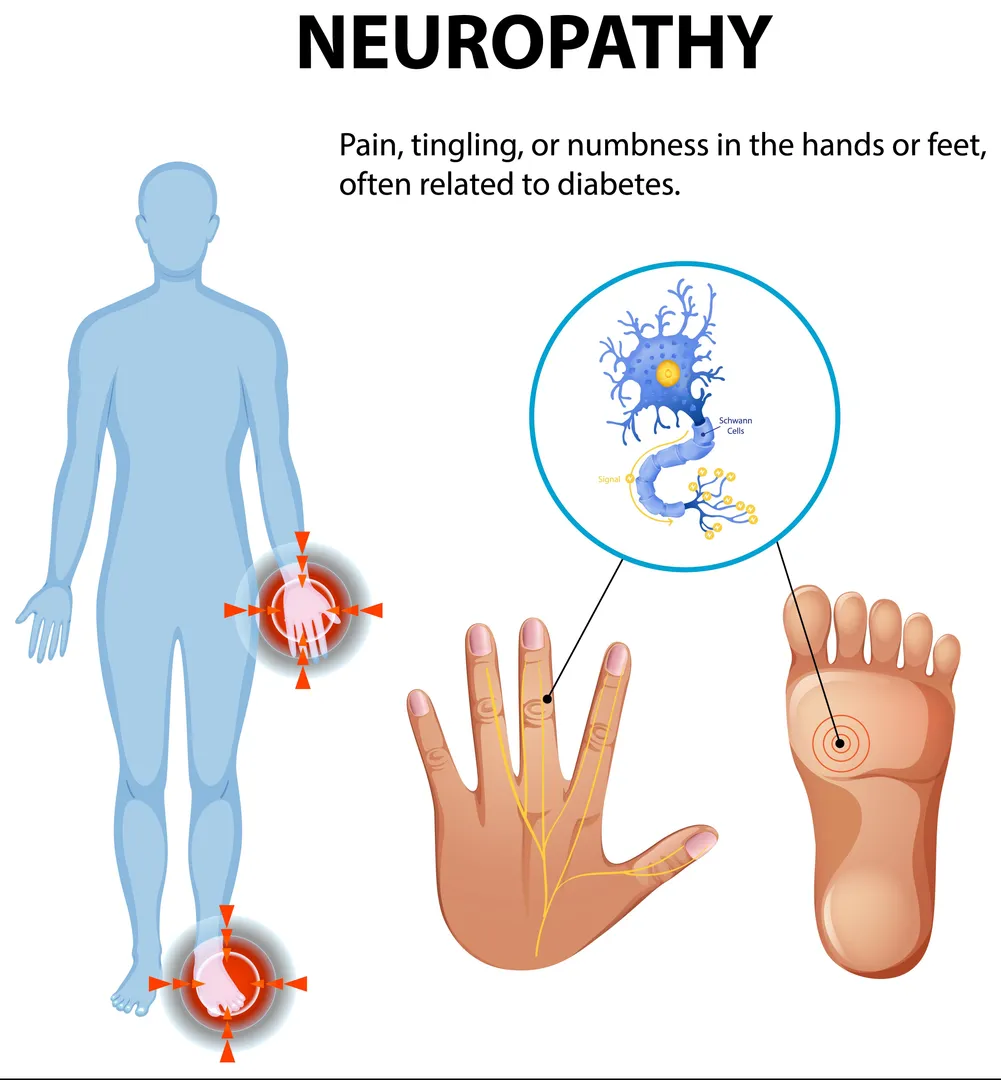
Tingling feet after sitting in one position is common, but persistent tingling, burning, numbness or unusual sensitivity can have a different explanation in someone living with diabetes. Diabetes neuropathy develops when nerves become damaged, with prolonged high blood glucose being an important risk factor.
People with diabetes in Panchkula, Haryana, should therefore treat recurring changes in sensation as something worth evaluating rather than simply accepting them as part of ageing.
What Does Diabetes Neuropathy Feel Like?
Diabetic peripheral neuropathy commonly affects the feet and legs first. Symptoms can vary considerably and may include:
- Burning or tingling sensations
- Pins and needles
- Numbness
- Sharp or shooting pain
- Increased sensitivity to touch
- Reduced ability to feel temperature
- Muscle weakness in some cases
Some people experience noticeable pain, while others lose sensation without significant discomfort.
Why Numbness Can Be Particularly Risky
Pain usually warns us that something is wrong. When sensation becomes reduced, that warning system may not work properly.
A person may develop a shoe-related blister, step on a small object or sustain a minor cut without noticing it immediately. Continued pressure on the affected area can make the injury worse.
That is why diabetic neuropathy and diabetic foot problems are closely connected.
What Can Increase the Risk?
Long-term poor glucose control can increase the likelihood of nerve damage. Other factors may also contribute, including the duration of diabetes and associated cardiovascular or metabolic risk factors.
Managing diabetes comprehensively therefore matters even when neuropathy symptoms are mild.
Make Foot Inspection Part of Your Routine
People experiencing reduced sensation can benefit from examining their feet every day. Look at the soles, heels and spaces between the toes. A mirror can make areas that are difficult to see easier to inspect.
Watch for:
- Cracks or cuts
- Blisters
- Swelling
- Redness
- Corns or calluses
- Changes in skin colour
- Wounds that are not healing normally
Footwear should also be checked for stones, rough seams or damaged areas before it is worn.
When Symptoms Need Assessment
Persistent burning, numbness or tingling deserves evaluation, particularly when symptoms are getting worse or interfering with sleep, walking or everyday activities.
Assessment is also important because not every case of numbness or foot pain in a person with diabetes is automatically diabetic neuropathy. Other neurological, vascular or musculoskeletal problems can produce similar symptoms.
For people across Panchkula and the wider Chandigarh Tricity region, awareness is one of the most useful forms of prevention. SAISA MEDI LLP operates in the diabetes-care segment and provides diabetes-related supportive solutions for this regional market.
Recognising changes in sensation early gives individuals an opportunity to strengthen glucose management, improve foot-care habits and address problems before an unnoticed injury becomes more difficult to manage.
Keywords