SAIRUB DIABA WOUND CLEANER
Description
SAIRUB Diaba Wound Cleaner is an effective herbal wound cleaner helpful in diabetic foot care for promoting faster wound healing and reducing the infection. This is a pure Ayurvedic cream extracted in sub atomic particles to treat various types of external wounds and skin problems especially diabetic foot ulcers. This has anti-inflammatory effects that help subside the pain and swelling around the diabetic foot wound along with anti-microbial properties that prevent the growth and multiplication of microorganisms in and around the diabetic foot wound. This helps in cleansing the wound surface, removing the debris and infected skin cells from in and around the wound and accelerating the wound’s healing process. The presence of flavonoids, tannins, glycosides, and alkaloids makes it highly effective for wound healing especially in early stages of diabetic foot ulcer. This also helps to reduce irritation and soothe the wound due its cooling and non-irritant properties.
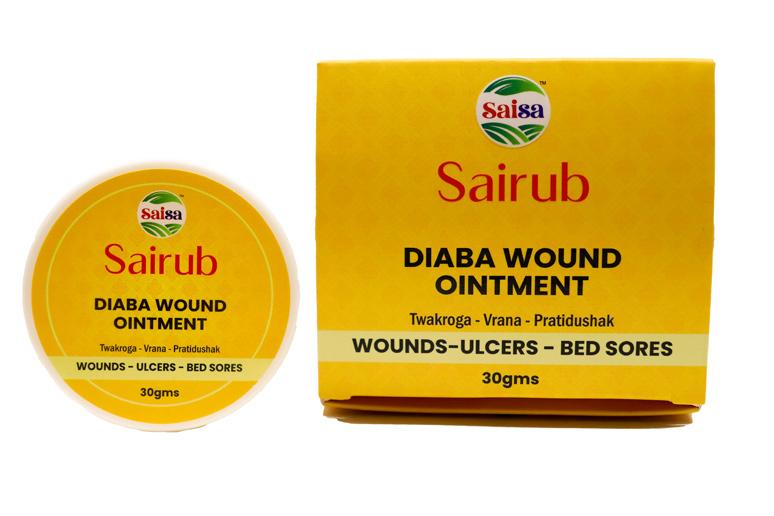
Applying Sairub Diaba Wound Cleaner first for cleansing followed by applying Sairub Diaba Wound Ointment for healing we can heal Chronic wounds, Diabetic foot ulcers, bedsores along with other wounds effectively.
<b>COMPOSITION</b>
<b>Nariyal (Cocos nucifera):</b> Nariyal contains antimicrobial properties which prevent growth of unwanted bacteria & remove dead skin and keeps infections at bay. It is rich in vitamin E, antioxidant as well as anti-inflammatory properties that help to control excessive itching, promotes the healing process & helps in skin regeneration due to its oily, healing and rejuvenating properties.
<b>Tailaparna (Eucalyptus globulus):</b> Eucalyptus oil helps in quick healing of the wound, decreases swelling and brings back the normal texture of the skin due to its healing properties. Its Antibacterial properties also protect the skin from infection and its cooling effect on skin reduces pain and inflammation.
<b>Haldi (Curcuma longa):</b> The “Curcumin” found in turmeric can help wounds heal by decreasing inflammation and oxidative stress. Turmeric contains antioxidants, antimicrobial, and anti-inflammatory components and also analgesic effect providing relief from pain due to the essence of curcumin.
<b>Jaitun (Olea europea):</b> Olive oil contains a substance known as Oleocanthal which inhibits the activity of pain mediators. This reduces pain and inflammation in the body. It is beneficial for wound healing, primarily due to its anti-inflammatory, antibacterial and antioxidant properties. It also contains polyphenols, strong antioxidant property &vitamin A, D, E & K which protect cells from damage and support skin regeneration.
<b>Babuna (Matricaria chamomile):</b> It has anti-Inflammatory and anti-oxidant properties which by reduce swelling and irritation and help in wound contraction as well as closure, promoting healing and tissue repair. It helps to kill germs and prevent bacterial or fungal infections in the affected area, slowing the spread of microorganisms and keeping the wound clean and reduces the risk of further infection.
<b>Pudina (Mentha piperata):</b> Pudina has anti-inflammatory, anti-bacterial properties antimicrobial & antioxidant properties that inhibit the growth of bacteria, shortens the inflammatory phase and help accelerate wound healing. Pudina contain a high amount of salicylic acid which acts as anti-acne& also acts as an effective skin cleanser. It improves the healing process by preventing infections and microorganisms’ growth.
<b>Sarso (Brassica campestris):</b> The powerful anti-inflammatory, anti-bacterial and anti-fungal property of Mustard oil help kill bacteria, keeping the wound clean and free from infection. It prevents dryness & itching of the skin and increases blood circulation. The mineral Selenium in Sarso is known to reduce pain and inflammation
<b>Neem (Azadirachta indica):</b> Neem has good “antimicrobial, anti-inflammatory and anti-oxidant properties that helps prevent cell damage& excellent wound healer that helps the body to rapidly create collagen fibers to close the wound. It contains compounds like nimbidin and nimbin, along with fatty acids and other nutrients that support the proliferation phase of healing and promote the growth of new tissue. neem leaf extract can be used as an irrigation solution for wounds, particularly for chronic or diabetic foot ulcers.
<b>Aloe vera (Aloe barbadensis):</b> Aloe vera has anti-inflammatory and antibacterial properties which reduce pain and the risk of infections at the site of wound. It promotes collagen production thus help improve wound contraction and cell repair.
<b>Kapoor (Cinnamomum camphora):</b> Camphor has a wide variety of topical uses due to its antibacterial, antifungal, and anti-inflammatory properties. Camphor acts as a counter-irritant as it first produces a feeling of warmth by increasing the blood flow & gives a soothing and cooling effect. It also helps increase production of collagen thereby improve tissue regeneration and accelerates wound healing.
<b>Arand (Ricinus communis):</b> Castor oil has anti-inflammatory properties, which help to reduce swelling & pus formation. It has antiviral & antimicrobial properties & rich in Ricinoleic acid which help inhibit microbial growth in and around the wound surface and fight infection. Castor oil helps heal wounds by stimulating the growth of new tissue, reducing dryness & preventing the buildup of dead skin cells.
<b>Methi (Trigonella foenum graecum):</b> Methi contains Saponins which can produce steroidal effects which decrease inflammation in the body. It has been reported that fenugreek releases anti-inflammatory substance into wound region and decreases inflammation. Flavonoids & triterpenoids in it promote the wound healing process because of its antimicrobial &antioxidant properties