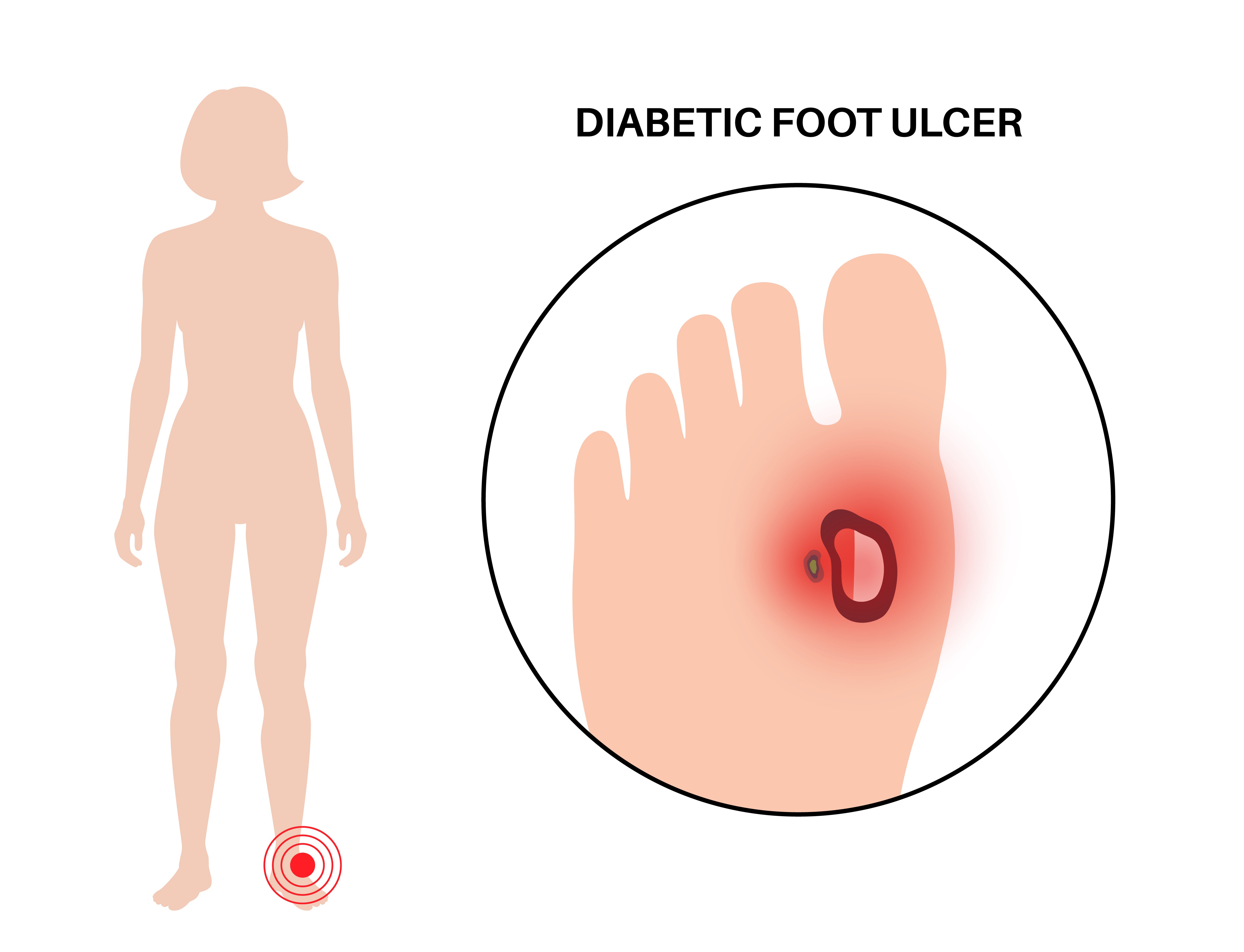
A diabetic foot ulcer may begin with something surprisingly small: a blister from footwear, a cracked callus or an unnoticed cut. When diabetes has affected sensation or circulation, however, that minor injury can become much harder to manage.
Knowing the essentials of diabetic foot ulcer care is particularly important for people with diabetes in Panchkula, Haryana.
Do Not Judge an Ulcer Only by Pain
A common mistake is assuming that a serious wound must be painful.
Diabetic neuropathy can reduce sensation significantly. An ulcer may therefore worsen while causing relatively little discomfort.
Instead of using pain as the main indicator, look at the wound itself and changes in the surrounding foot.
Warning Signs Include
- Increasing redness
- Swelling
- Warmth around the wound
- Pus or other discharge
- Unpleasant odour
- Darkening or unusual skin colour
- Increasing wound size or depth
- Fever or feeling unwell
Rapid deterioration, spreading infection or blackened tissue requires urgent medical assessment.
What Happens During Professional Ulcer Care?
The exact approach depends on the wound.
Assessment can include examining the depth and location of the ulcer, looking for infection, evaluating circulation and checking the degree of neuropathy.
Treatment may involve appropriate wound cleaning and dressing, pressure reduction or offloading, infection management where necessary and better control of blood glucose.
More complex wounds can require multidisciplinary management.
Avoid Risky Home Remedies
Putting unverified substances directly into an open diabetic wound can irritate tissue, contaminate the ulcer or delay appropriate treatment.
Likewise, simply covering the wound without addressing repeated pressure may not solve the underlying problem.
A person with neuropathy may continue walking on an injured area because it does not hurt, repeatedly damaging tissue during normal daily activity.
Prevention Continues After Healing
A healed ulcer does not mean foot-care precautions are no longer necessary. Previous ulceration can indicate an increased risk of future problems.
Footwear, pressure points, calluses and daily inspection therefore remain important.
SAISA MEDI LLP serves the diabetes-care products market across Panchkula and Chandigarh Tricity. Supportive foot-care products may have an appropriate role in routine diabetes care, but an established ulcer, suspected infection or rapidly worsening wound requires suitable clinical evaluation rather than product-based self-treatment alone.
Make Daily Inspection Non-Negotiable
People with diabetes who have reduced foot sensation should make visual inspection a daily habit.
Early detection gives a small blister or crack a better chance of being addressed before it progresses.
For residents of Panchkula, diabetic foot ulcer care is ultimately built around three priorities: recognizing wounds early, obtaining appropriate treatment and reducing the factors that caused or worsened the injury. Those simple principles can make foot care considerably safer for people living with diabetes.
Keywords